
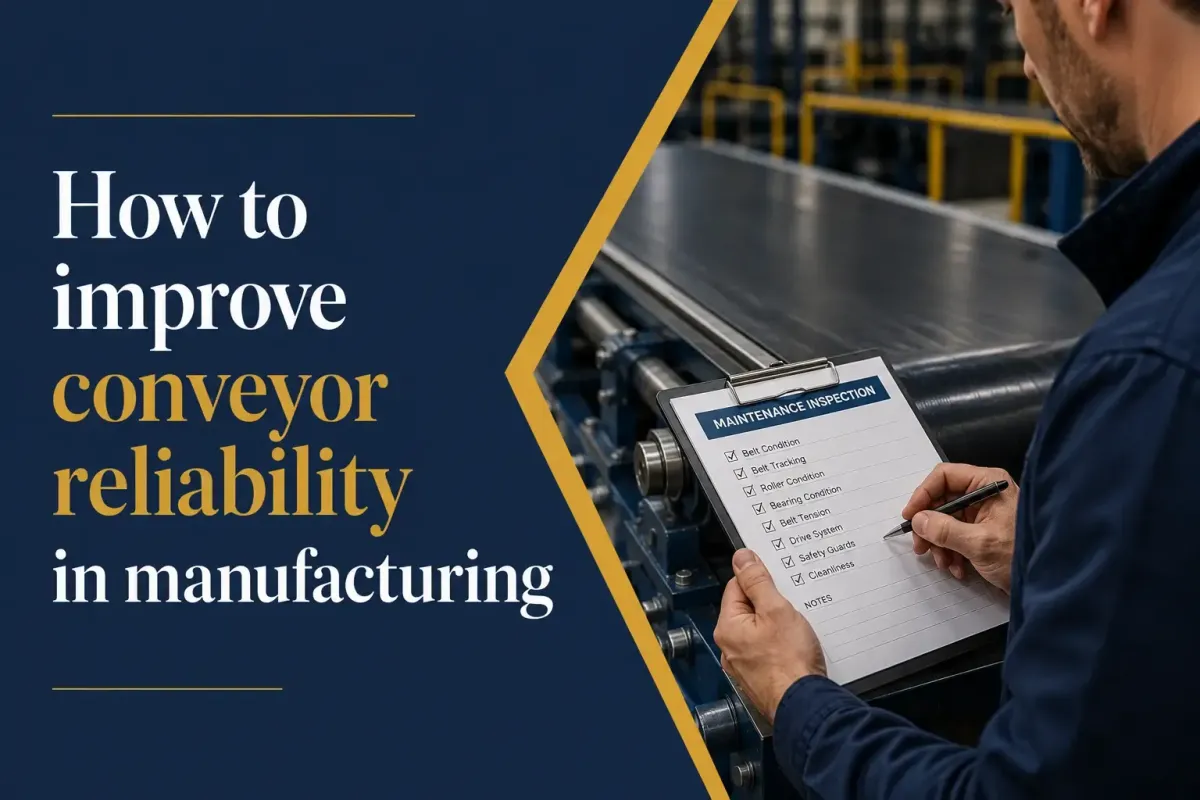
Unexpected conveyor downtime can bring an entire manufacturing operation to a standstill. Improving reliability isn't about waiting for something to fail—it's about choosing the right equipment, carrying out routine maintenance, and identifying small issues before they become costly breakdowns.
Here are five areas that have the biggest impact on conveyor reliability.
Belt selection matters more than you'd think
Choosing the correct conveyor belt for the application is one of the biggest factors in long-term reliability. A belt that's underspecified for the load or operating environment will wear faster, require more repairs, and ultimately cost more in downtime than any initial saving.
Why it matters
Correct belt specification improves service life
Handles the intended load safely
Reduces premature wear and damage
Minimises unexpected downtime
Lowers long-term operating costs
Worth Knowing: Belt selection should consider load weight, operating temperature, incline angle, operating speed and the material being conveyed—not simply the purchase price.
Routine maintenance prevents breakdowns
Waiting until something fails is almost always the most expensive approach. Planned inspections allow minor issues to be corrected before they interrupt production.
What should be checked
Belt tracking and alignment
Belt tension
Rollers and bearings
Drive and return pulleys
Material build-up
Signs of belt wear or damage
Worth Knowing: Regular maintenance often extends belt life significantly while reducing emergency call-outs.
If you're deciding whether routine servicing is worthwhile, our guide to planned maintenance versus ad hoc repairs explains the advantages of each approach.
Don't overload the conveyor
Even occasional overloading places additional strain on the conveyor belt, motor and supporting structure. Over time this accelerates wear and increases the likelihood of failure.
Common causes of premature wear
Overloading the conveyor
Incorrect product distribution
Operating beyond the conveyor's design capacity
Repeated shock loading
Worth Knowing: Many reliability issues are caused by operating conditions rather than defective components.
Spot problems before they become failures
Conveyor systems usually provide warning signs before a breakdown occurs. Identifying these early can prevent costly production stoppages.
Early warning signs
Unusual squealing, grinding or knocking noises
Belt misalignment
Edge fraying
Inconsistent conveyor speed
Excessive motor temperature
Increased vibration
Worth Knowing: Acting on early warning signs is almost always less expensive than dealing with an unexpected breakdown.
Build reliability into your operation
Businesses with critical production lines benefit from having a conveyor specialist inspect their equipment on a planned schedule rather than only calling when something goes wrong.
Routine inspections allow wear patterns and developing faults to be identified early, reducing downtime and helping maintenance become predictable rather than reactive.
A simple way to decide
If conveyor downtime regularly disrupts production, focus on three priorities:
Choose the correct conveyor belt for the application.
Carry out routine inspections and planned maintenance.
Investigate small problems before they become major failures.
These simple steps can significantly improve reliability while reducing repair costs and unexpected production stoppages.
Good practice
Correct belt specification
Planned maintenance
Routine tracking checks
Monitoring unusual noises
Operating within design limits
Avoid
Choosing a belt based on price alone
Waiting until something fails
Ignoring belt misalignment
Assuming problems will resolve themselves
Regularly overloading the conveyor
Still experiencing conveyor breakdowns?
If recurring conveyor problems are affecting production, speak to a conveyor specialist. They can assess your system, identify the root causes of repeated failures and recommend practical improvements that reduce downtime and improve long-term reliability.