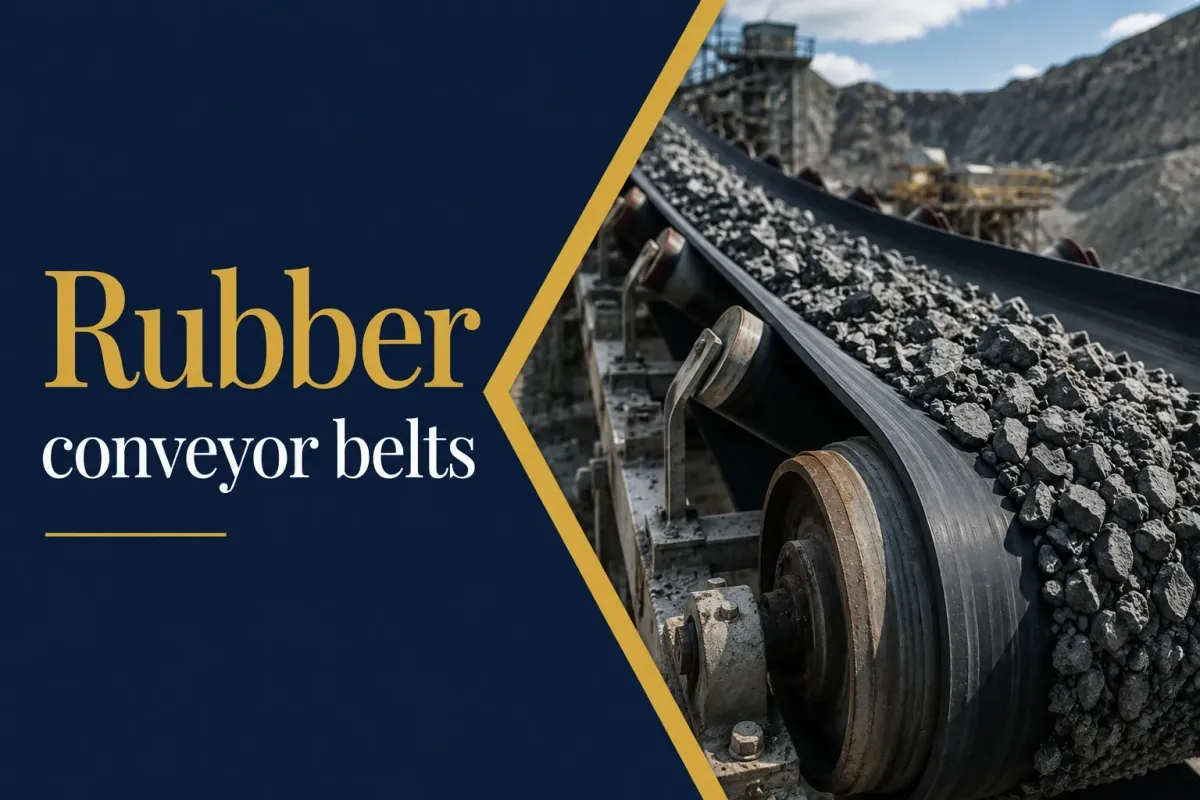
When the work gets heavy, wet or abrasive, rubber is what you want.
Rubber conveyor belts handle the conditions that would destroy a PVC belt: impact loading, sharp aggregate, outdoor weather, continuous punishment.
If you're moving bulk materials in Yorkshire and need a belt that can actually take it, here's what you need to know.
What is a rubber conveyor belt?
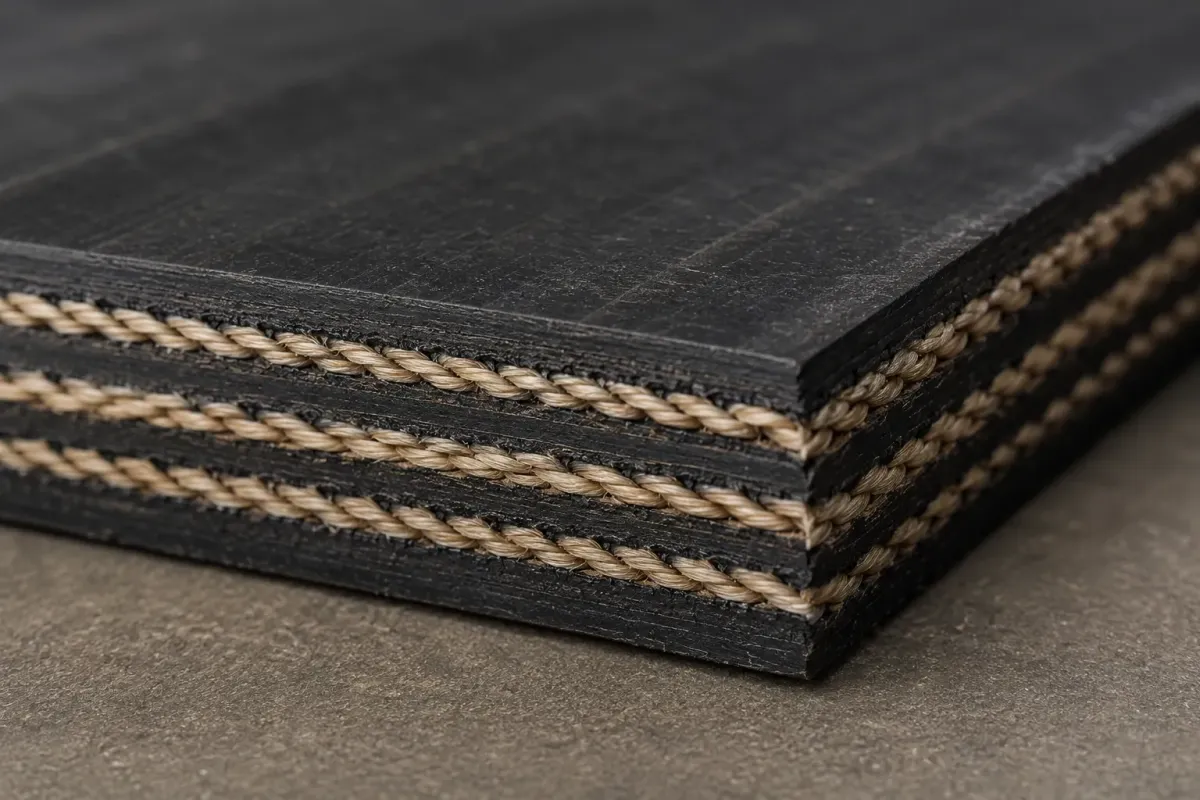
A rubber conveyor belt is built around a carcass, layers of woven fabric (usually polyester and nylon, known as EP fabric) bonded together, with rubber covers on the top and bottom.
The carcass gives the belt its tensile strength. The rubber covers take the abuse. For the heaviest applications, steel cord replaces fabric in the carcass entirely.
The thickness and grade of those rubber covers is what actually separates one belt from another.
A belt carrying sharp stone off a crusher needs a very different cover to one moving grain, and the ply count and tensile rating underneath need to match the load, the tension, and the length of the run.
Rubber belts dominate wherever the material being moved would tear up anything lighter: quarries, recycling lines, aggregate processing, heavy manufacturing, outdoor conveying in all weather.
If PVC is the workhorse of the warehouse, rubber is the workhorse of everything rougher.
Benefits of rubber conveyor belts
Handles impact
Heavy or sharp material dropping onto the belt gets absorbed by the rubber covers and carcass. This is what rubber belts are built for.
Handles wet conditions
Wet aggregate, washed materials, outdoor exposure. Where PVC struggles, rubber is standard.
High tensile options
From light-duty fabric belts to steel cord constructions for long runs and heavy tonnages.
Works outdoors
Rain, UV, frost and temperature swings are all within normal operating conditions. Rubber belts run outside all year round.
Specialist grades available
Heat resistant, oil resistant (MOR), fire resistant (FRAS), and food-quality grades exist for demanding or regulated environments.
Repairable and spliceable
Damaged sections can be repaired, re-covered or re-spliced on site by a specialist. Belts can be joined by hot vulcanising or mechanical fasteners depending on the application.
Long service life in hard conditions
In the environments rubber belts are designed for, nothing else lasts as long.
Common industries
Industries that use Rubber conveyor belts
Quarrying and aggregates
Crushed stone, sand and gravel moving off crushers and screens. The classic rubber belt application, and the harshest.
Recycling and waste
Mixed, unpredictable, often sharp material. Rubber covers take the impact and abrasion that sorting lines dish out daily.
Construction materials
Cement, concrete products, bricks and blocks. Heavy loads, dusty conditions, continuous running.
Agriculture
Grain, feed and root crop handling. Oil-resistant grades where seed oils are involved.
Mining and extraction
Steel cord and high-tensile fabric belts for long runs and serious tonnage.
Heavy manufacturing
Foundries, steel processing, glass. Environments where heat-resistant grades earn their keep.
Timber and biomass
Logs, chip and pellet handling. Impact at the loading point, abrasion along the run.
Outdoor conveying
Any application exposed to weather. Rubber runs outside all year without special treatment.
Choosing the right rubber conveyor belt
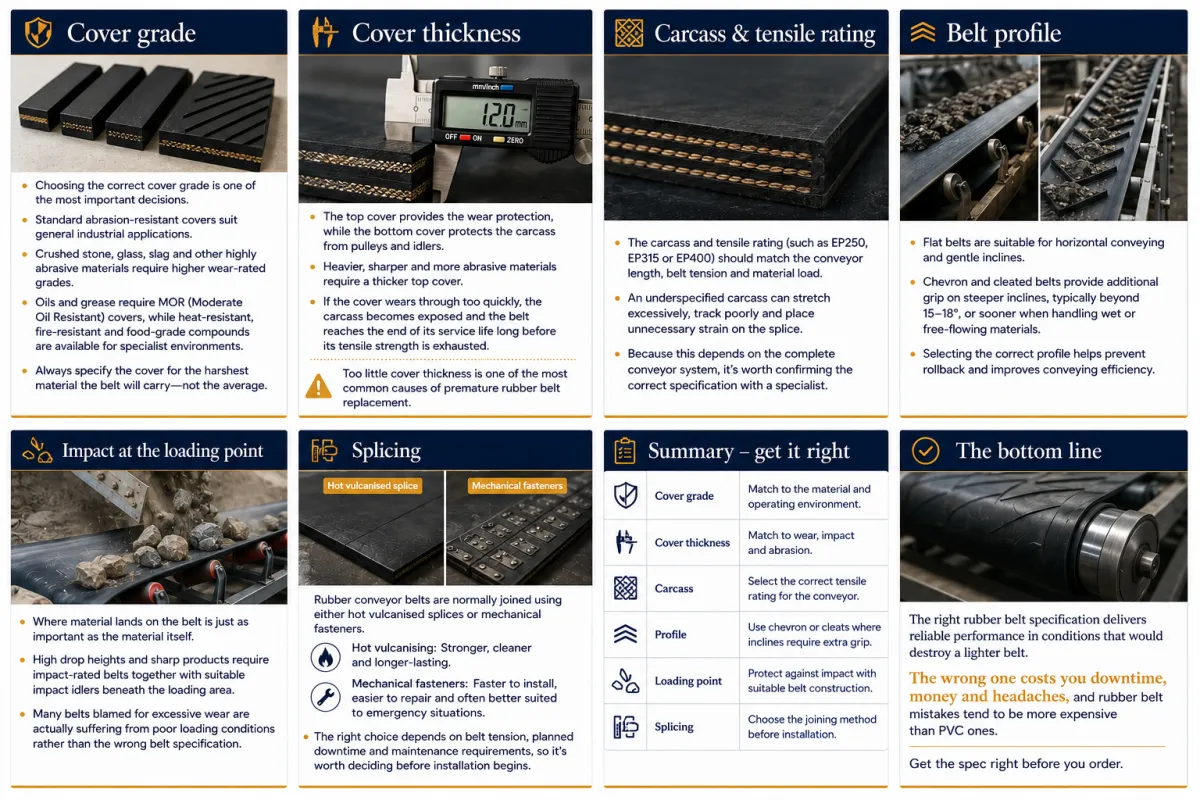
Rubber belts fail early for the same reason PVC belts do: wrong spec for the job. The difference is that rubber belt mistakes tend to be more expensive. Here's what to get right.
Why choose Yorkshire Conveyor Belts?
We make finding the right conveyor belt specialist simple.
Finding the right supplier shouldn't mean ringing five different companies or hoping you've found the right one.
We're not a supplier.
We connect Yorkshire businesses with conveyor belt specialists who are, people who supply, splice, repair and maintain rubber belting across the region and know the difference between a belt problem and a conveyor problem.
Tell us what you need and we'll match you with someone who can actually help.
We cover Leeds, Sheffield, Bradford, Hull, Doncaster, Wakefield and the wider Yorkshire area.
Why businesses use us
🏆Trusted local specialists
Vetted conveyor belt experts across Yorkshire.
⚡24-hour response
Fast replies when production can't wait.
🛡No obligation
Advice first. Decide when you're ready.
🏭Industrial expertise
Warehousing, manufacturing, food and logistics.
🏭Fast, simple process
Complete one 2-minute survey
✔Right specification
We help you avoid costly mistakes.
📍Yorkshire coverage
Leeds, Sheffield, Hull, Bradford, Doncaster and beyond.
Still need help choosing the right belt?
Rubber conveyor belt FAQs
What are rubber conveyor belts used for?
Bulk and heavy material handling: quarrying, aggregates, recycling, construction materials, agriculture, mining, timber, and any outdoor conveying. Anywhere the material is too heavy, sharp, wet or abrasive for lighter belt types.
What's the difference between rubber and PVC conveyor belts?
Construction and duty. PVC belts suit lighter, cleaner, indoor applications: parcels, packaged goods, food production. Rubber belts are built for impact, abrasion, weather and bulk material. Rubber costs more and needs a more robust conveyor structure, but in heavy applications it's not really a choice. PVC simply won't survive.
How long do rubber conveyor belts last?
Entirely dependent on the application. A correctly specified belt on a well-maintained conveyor in a quarry might run 2 to 5 years. The same belt underspecified might be finished in months. The biggest factors are cover grade versus material abrasiveness, loading point condition, and whether tracking and tension are actually maintained.
Can rubber conveyor belts be repaired?
Yes, and it's routine. Cover damage can be patched or re-covered, rips can be repaired, and splices can be redone on site. Hot vulcanised repairs are the most durable; cold repair and mechanical fasteners are faster options. A specialist will tell you when repair makes sense and when the belt is genuinely done.
What do the belt gradings like EP315 mean?
EP refers to the carcass fabric: polyester (E) in the warp, nylon (P) in the weft. The number is the tensile strength in kN/m per ply. Higher numbers and more plies mean a stronger belt for higher tensions and heavier duty. Your conveyor's design tension determines what you need. It's not a "more is better" decision.
Do rubber belts work on inclines?
Flat rubber belts handle gentle inclines. Beyond roughly 15 to 18 degrees with loose material, you need chevron or cleated profiles to stop material rolling back, sooner if the material is wet or rounded. Steeper than that again and you're into specialist territory: sidewall belts and elevator systems.
What maintenance does a rubber conveyor belt need?
Tracking checks, since a belt running off-centre destroys its own edges. Tension checks. Keeping the loading point in good condition, because worn impact idlers and bad chutes cause most "belt" damage. Scraper and cleaner maintenance so carryback doesn't build up. And regular visual checks of the covers and splice. None of it is complicated. All of it extends belt life significantly.
Need a rubber conveyor belt in Yorkshire?
Replacement belt, splicing, repair, or a full conveyor project, whatever you're dealing with, we can connect you with a Yorkshire rubber belt specialist who can help. Tell us what you need.